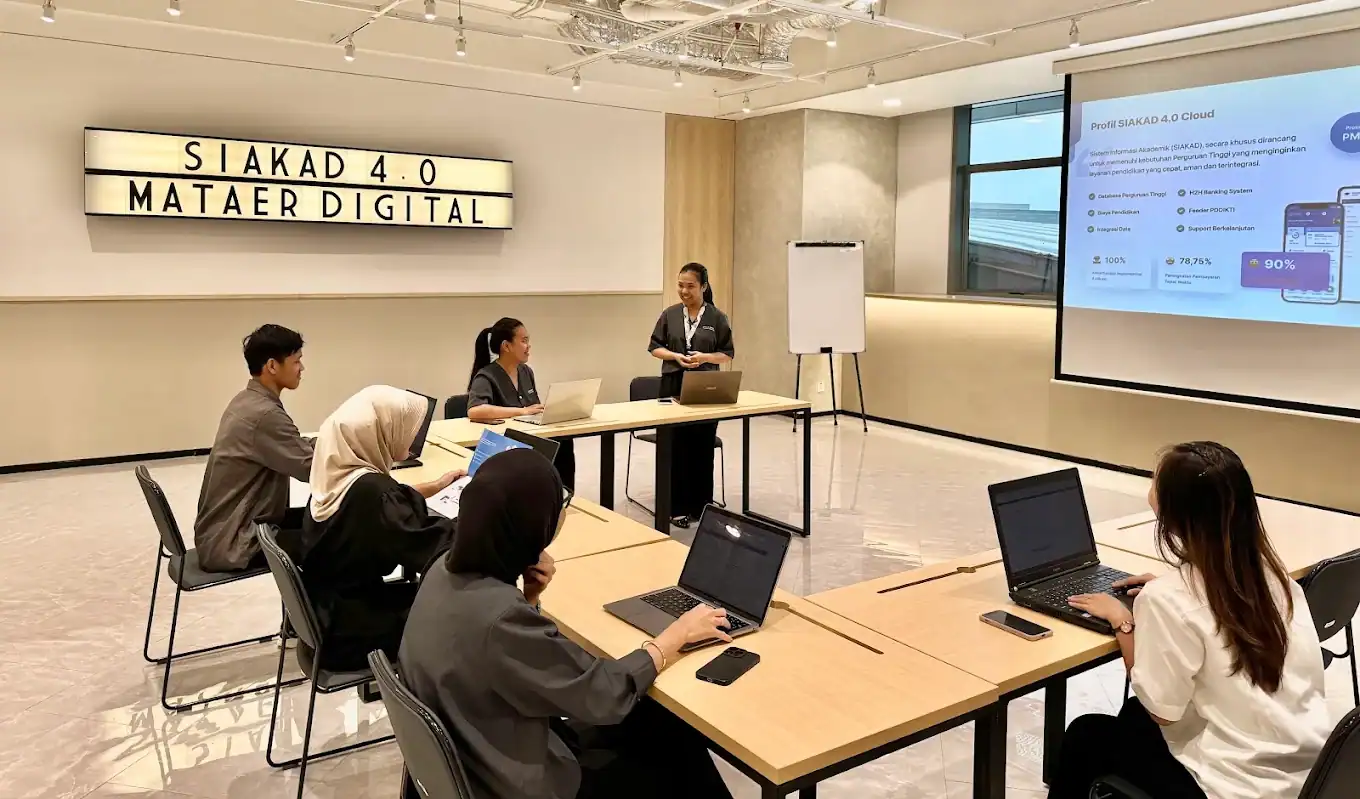
Mataer Edutech is an Indonesian IT company driving digital transformation in higher education. Partnering with universities nationwide, it delivers innovative, secure, and user-friendly technology to improve governance, operational efficiency, and academic services.
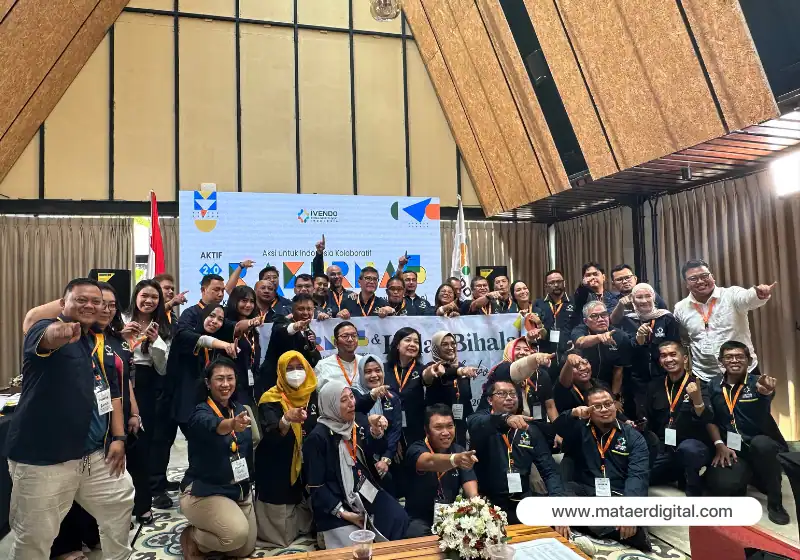
With a vision to be a leading Edutech provider, Mataer combines technical expertise, practical solutions, and collaborative partnerships to position itself as a trusted partner for modernizing campuses and advancing higher education across Indonesia.
Challenges
Mataer Edutech, a fast-growing Indonesian EdTech company, has faced employee retention challenges that threaten operational continuity and growth. High turnover and limited retention, particularly in Marketing & Sales and Technical teams, have affected project timelines, service consistency, and institutional knowledge.
Key drivers of these challenges include:

Rapid scaling
increased pressure
on staff, creating
stress and dissatisfaction.

Employees had unclear progression paths and insufficient learning opportunities.

Salary and benefits were perceived as less competitive relative to peers.

Critical expertise was informal and undocumented, creating dependency on a few key employees.

Leadership prioritized efficiency and cost control, unintentionally deprioritizing engagement and retention.
Together, these factors affect revenue stability, service quality, and the ability to scale sustainably, highlighting the importance of treating HR and employee experience as a strategic growth enabler rather than a purely administrative function.
Analysis: Root Cause (Fishbone)
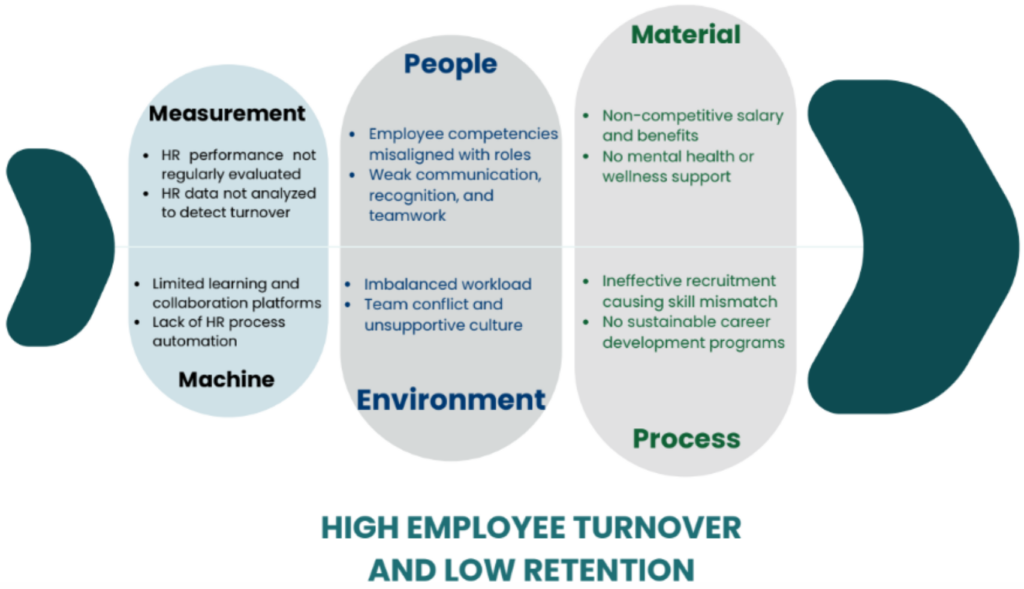
The Fishbone diagram highlights that high employee turnover and low retention at Mataer Edutech are driven by interrelated factors across People, Process, Material, Environment, Machine, and Measurement. Key drivers include misaligned competencies, workload imbalances, insufficient career development, limited HR analytics, and gaps in compensation and wellness support.
This analysis demonstrates that turnover is systemic rather than isolated: operational processes, leadership priorities, and organizational culture collectively influence retention. Addressing these root causes requires integrated, strategic interventions spanning HR systems, knowledge management, and employee experience, rather than focusing on single factors.
5 Whys: Understanding Employee Turnover at Mataer Edutech
Employee turnover is a common challenge in growing organizations. A structured 5 Whys analysis helps identify the underlying factors and opportunities to strengthen talent retention and organizational systems.
#1 | Why are employees leaving? |
#2 | Why do they feel dissatisfied and disengaged? |
#3 | Why does HR lack such systems? |
#4 | Why does HR fail to act as a strategic partner? |
#5 | Why is strategic HR not embedded in organizational priorities? |
Employee retention is a system-wide opportunity rather than a problem. Strengthening HR systems, knowledge-sharing practices, and career development initiatives can enhance employee engagement and support sustainable organizational growth.
Current State & Impact
As Mataer Edutech continues its growth journey in the educational technology sector, maintaining a strong workforce and smooth operational continuity is essential. Understanding how current retention trends affect different parts of the organization helps highlight opportunities for improvement and strategic alignment. The table below highlights the impact on each part of the organization, along with opportunities to strengthen growth and collaboration.
Stakeholder/Function | Current State | Opportunities |
|---|---|---|
Top Management | Managing growth while balancing workforce planning | Integrate talent strategy more deeply into business expansion |
Human Resources (HR) | Supporting recruitment, development, and engagement programs | Enhance HR processes, career pathways, and employee experience |
Marketing & Sales | Transition periods require knowledge sharing and onboarding | Maintain client engagement and build scalable performance systems |
Technical Teams | Projects rely on existing expertise; cross-training ongoing | Strengthen collaboration and service quality through structured skill documentation |
Clients | Service delivery remains consistent | Reinforce trust through transparent communication and reliable project management |
These observations show opportunities for growth and optimization. By reinforcing HR systems, knowledge management, and cross-functional collaboration, Mataer Edutech can continue scaling effectively while delivering value to employees, teams, and clients.
TOWS Analysis
As Mataer Edutech continues to expand in the Indonesian educational technology sector, understanding the organization’s internal capabilities and external environment is essential. A SWOT analysis provides a structured view of strengths, weaknesses, opportunities, and threats, helping stakeholders see where the company is well-positioned and where attention may be needed.
Threats | Opportunities |
|
|
Weaknesses | Strengths |
|
|
The SWOT analysis highlights both where Mataer Edutech excels and where there are potential vulnerabilities. By clearly identifying these factors, the organization can make informed decisions in subsequent planning stages, ensuring growth strategies are grounded in a realistic understanding of internal capabilities and market conditions.
Recommendation
Building on the analysis of workforce trends, operational impact, and TOWS insights, Mataer Edutech can strengthen growth and sustainability through targeted, strategic actions. These recommendations focus on enhancing employee experience, operational efficiency, and long-term organizational resilience.
Recommendation | Stakeholder | Expected Value |
Talent Retention & EVP Enhancement | Top Management |
|
HR Analytics & Knowledge Management | Human Resources (HR) |
|
Capability & Skill Development | Marketing & Sales, Technical Teams |
|
Employer Branding & Strategic Partnerships | Employer Branding / HR |
|
Process & CRM Optimization | Marketing & Sales |
|
By implementing these recommendations, Mataer Edutech can lower turnover costs, accelerate time-to-productivity, and build scalable operations. Each action aligns with specific stakeholders, ensuring that improvements are both practical and measurable, supporting a sustainable growth trajectory and enhanced employee and client experiences.
Conclusion
Mataer Edutech’s growth journey demonstrates that workforce and operational challenges, when properly understood, can become opportunities for sustainable development. By addressing root causes of turnover, enhancing HR systems and knowledge management, investing in employee skills, and optimizing processes, the company can strengthen collaboration, maintain service quality, and support long-term scalability. These insights highlight the importance of integrated, strategic approaches that connect talent, operations, and client delivery, ensuring Mataer Edutech continues to innovate and lead in the educational technology sector.
Contributors
This is a Business Immersion article researched and written by Group 6 of the Entrepreneurial Marketing MBA (ENMARK MBA) Batch 3, consisting of:
Business Immersion is a key component of the Entrepreneurial Marketing MBA (ENMARK MBA) program, offering students the opportunity to collaborate with industry through group consultancy projects. During the third semester, from September to January, students will work as a team of consultants, tackling real-world business challenges. This immersive learning experience bridges the gap between academic theory and practical application, equipping students with the skills to address complex issues and explore innovative management approaches within established organizations.
—
Entrepreneurial Marketing MBA (ENMARK MBA), a collaboration between MarkPlus Institute and School of Business and Management Institut Teknologi Bandung, is designed to equip future leaders with expertise in marketing, management, business strategy, and an entrepreneurial mindset to drive innovation and career growth.
What sets ENMARK MBA apart is its holistic approach, integrating marketing, finance, and strategy to blend creativity with analytical thinking. Through real-world case studies and hands-on projects, students develop the agility and strategic acumen to excel in today’s dynamic business landscape.