Papermark was established in 2017 with a mission to redefine stationery as more than a functional product, positioning it as a medium for self-expression, mindfulness, and meaningful personal experiences. The brand specializes in premium journals, planners, and customized stationery products.

Its primary target market consists of young professional women aged 19 to 30 who value aesthetics, creativity, and personal development. To sustain its operations, Papermark applies a hybrid business model, combining B2B corporate orders with B2C direct-to-consumer sales. Seasonal trends significantly influence revenue, with sales peaking during festive periods such as the end-of-year holidays and Chinese New Year.

Problem Identification
Despite having a well-defined brand identity and high-quality products, Papermark encounters challenges in maintaining digital sustainability. The research revealed that a large follower base does not necessarily translate into purchasing behavior. A survey involving 40 Instagram followers in the Jabodetabek area indicated that while respondents appreciated Papermark’s visual appeal and product design, many did not feel a strong urgency or motivation to make a purchase. This suggested that the brand’s value proposition was not clearly communicated or emotionally compelling enough to justify its premium pricing.
Another major issue identified in the article is limited content reach and engagement. Approximately 40% of respondents reported that Papermark’s content rarely appeared on their Instagram feeds. This indicated low algorithmic visibility, which weakened the brand’s ability to consistently interact with its audience. As a result, Papermark’s followers tended to engage passively, viewing the content mainly for inspiration rather than considering themselves potential customers. This phenomenon highlights the risk of relying on vanity metrics such as follower count without measuring meaningful engagement or conversion.
The article emphasizes that Papermark’s content strategy was overly focused on visual aesthetics, with minimal emphasis on storytelling, education, or emotional connection. While visually appealing content aligned with the brand’s premium image, it lacked depth in conveying how the products could add value to customers’ daily lives. Consequently, the brand struggled to move audiences beyond admiration toward action. The study underscores the importance of shifting from product-centric communication to customer-centric storytelling in order to build stronger emotional bonds.
Solution: 5A Marketing
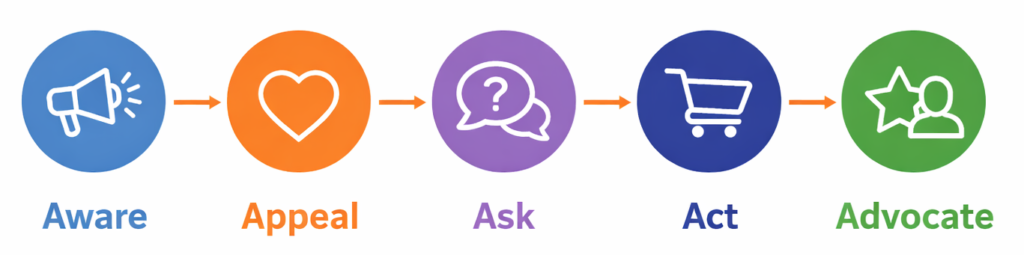
To address these challenges, the research adopts Philip Kotler’s 5A Customer Path framework—Aware, Appeal, Ask, Act, and Advocate—as a strategic foundation. This framework was customized to fit Papermark’s brand context and digital environment.

Aware
At the Aware stage, the strategy focused on increasing relevant exposure through collaborations with both micro and macro Key Opinion Leaders (KOLs). Rather than prioritizing influencer popularity alone, the study emphasized authenticity and audience alignment to ensure that collaborations generated meaningful awareness.

Appeal
At the Appeal stage, the article proposed a significant transformation in content strategy. Papermark was encouraged to implement storytelling-based content supported by a structured content calendar. This approach aimed to humanize the brand, communicate its values more clearly, and improve engagement rates. Content themes were designed to resonate with the audience’s lifestyle, emotional needs, and personal growth aspirations, rather than merely showcasing product visuals.

Ask
The Ask stage focused on building trust and credibility during the customer consideration process. To address this, the article introduced the concept of a brand persona named “Stephanie,” who represents Papermark’s customer service voice. This persona was intended to create a warmer, more approachable interaction with customers by responding to inquiries, sharing testimonials, and providing reassurance. By humanizing the brand, Papermark aimed to reduce customer hesitation and increase confidence in purchasing decisions.

Act
At the Act stage, the study emphasized the importance of fostering deeper engagement beyond transactions. One key initiative was the creation of the Papermark Journal Club, a community designed to connect customers through shared journaling experiences. This initiative was tested through an offline collaboration event with Senayan’s Sisterhood in November 2025. The event demonstrated how experiential marketing and community-building could strengthen emotional attachment and encourage repeat purchases.

Advocate
The final stage, Advocate, focused on transforming satisfied customers into brand promoters. The article proposed a referral-based advocacy program that rewards customers for sharing their experiences with others. Incentives such as personalized referral codes and welcome discounts were suggested to encourage organic word-of-mouth growth. This strategy aimed to reduce dependence on paid advertising while strengthening long-term brand credibility.
Conclusion
In conclusion, digital sustainability cannot be achieved solely through social media popularity. For Papermark, sustainable growth depends on its ability to convert followers into engaged customers and loyal advocates. By shifting focus from vanity metrics to meaningful relationships, emotional storytelling, and community engagement, Papermark can build a more resilient digital strategy. The study concludes that customer-centric transformation is essential for ensuring long-term brand relevance and financial sustainability in an increasingly competitive digital landscape.
Contributors
This is a Business Immersion article researched and written by Group 1 of the Entrepreneurial Marketing MBA (ENMARK MBA) Batch 3, consisting of:
Business Immersion is a key component of the Entrepreneurial Marketing MBA (ENMARK MBA) program, offering students the opportunity to collaborate with industry through group consultancy projects. During the third semester, from September to January, students will work as a team of consultants, tackling real-world business challenges. This immersive learning experience bridges the gap between academic theory and practical application, equipping students with the skills to address complex issues and explore innovative management approaches within established organizations.
—
Entrepreneurial Marketing MBA (ENMARK MBA), a collaboration between MarkPlus Institute and School of Business and Management Institut Teknologi Bandung, is designed to equip future leaders with expertise in marketing, management, business strategy, and an entrepreneurial mindset to drive innovation and career growth.
What sets ENMARK MBA apart is its holistic approach, integrating marketing, finance, and strategy to blend creativity with analytical thinking. Through real-world case studies and hands-on projects, students develop the agility and strategic acumen to excel in today’s dynamic business landscape.